When In Doubt Go With the Halibut - Or Why Pickleball Isn't Killing Tennis
It was a pleasant recent night out with old friends, acquaintances all who were current and former top senior tennis players. Some of them even ranked as high as #1 in the world or in Canada in their respective age categories—a feat they now mostly brag about to confused grandchildren and nervous physical therapists. Of course, I was thinking - what do I have in common with this group? Okay, I was ranked #1 in Ontario another decade or so ago, but that was a different time and place (when the mention of wooden racquets didn’t cause confusion).
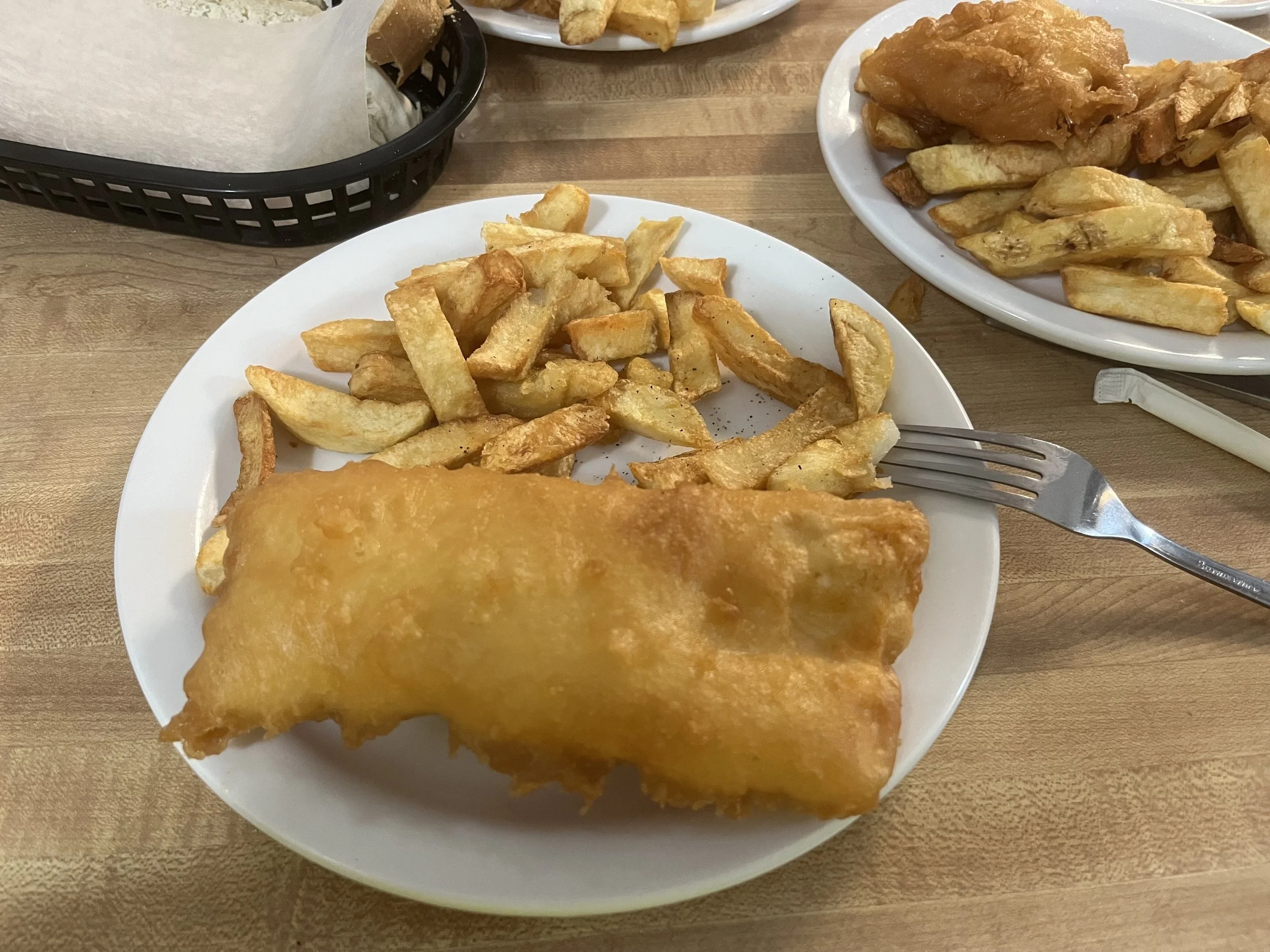
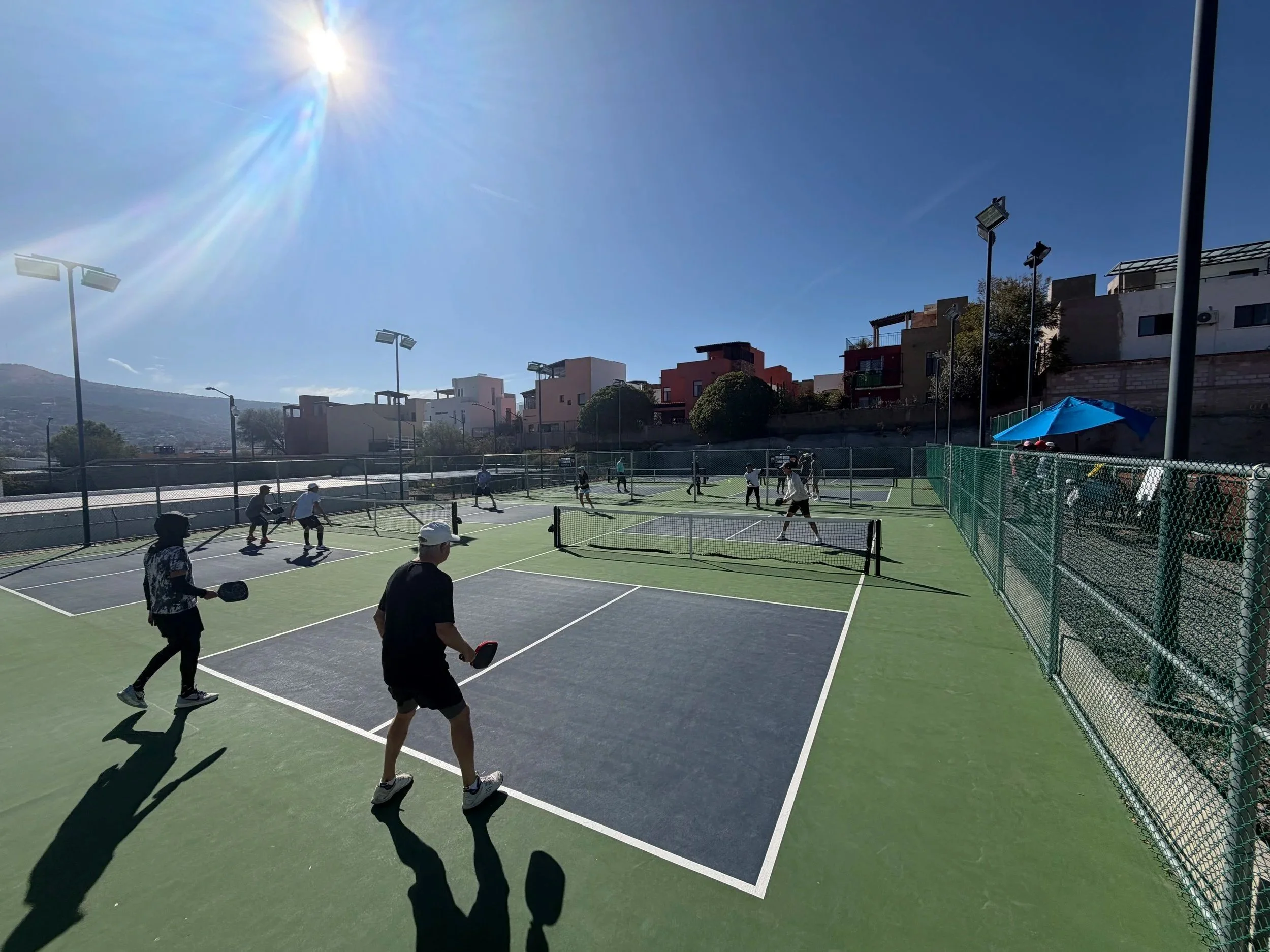
The Old Yorke Fish & Chips shop in Leaside seemed like an unlikely choice for our encounter. At some point in the conversation, our major decision was what type of fish do you want with your fish & chips? (A question that felt suspiciously like a Tie-Break scenario). I had been invited to join this somewhat “regular” group and it was a chance to hash out all of the old stories. But at our exalted age, the conversation often pivots sharply from grand slams to replaced hips and the brutal reality of which pension plan offers the best dental coverage. That is if you could hear what anyone said with our bad hearing.
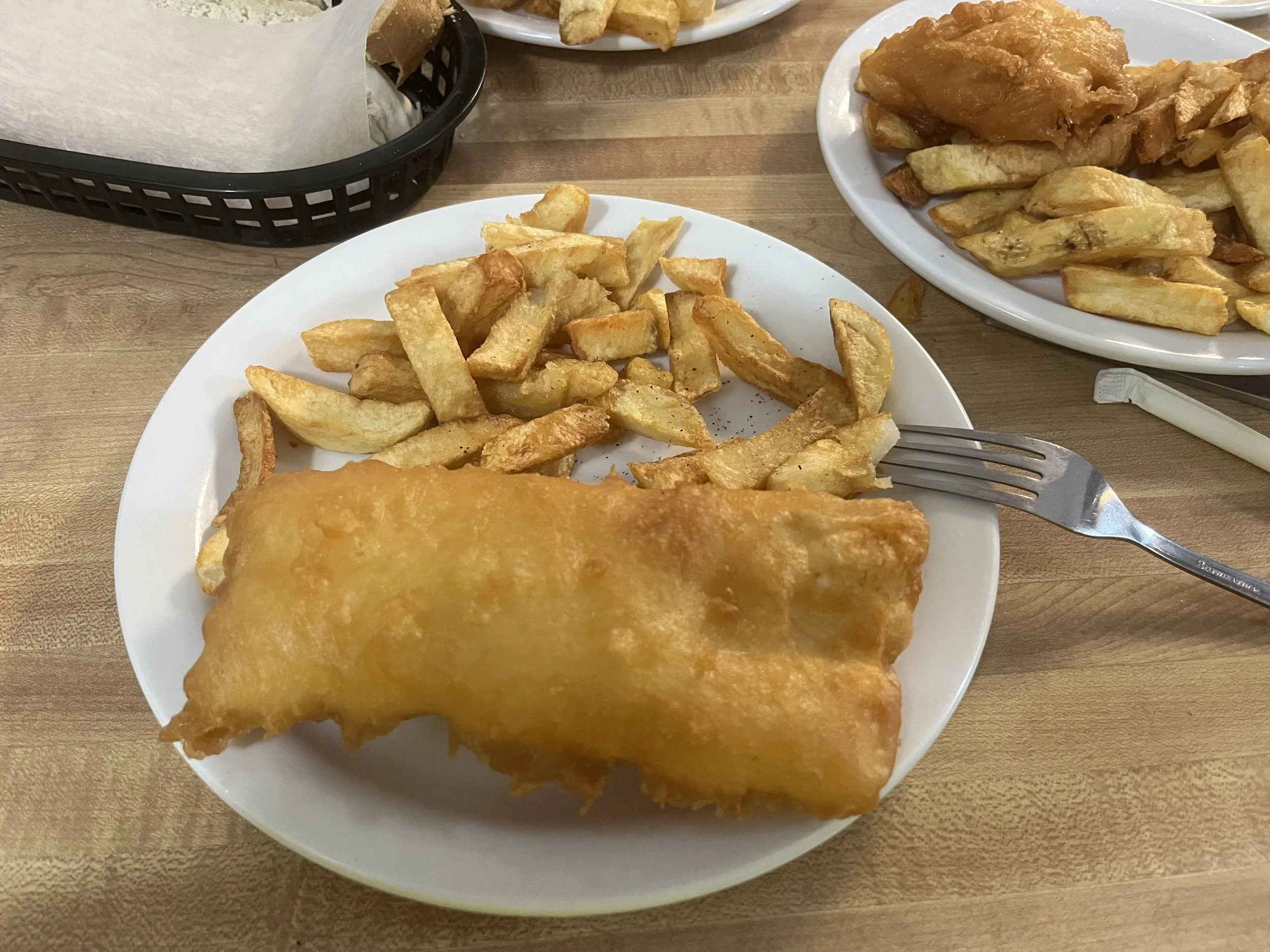
At an unexpected moment, when discussing what one does during the day, the topic of pickleball came up and I had “quietly” let them know that my tennis days had vanished and pickleball had replaced it. Of course, I had the regular excuses - shoulder surgery…..yada…..yada (I could practically recite the Diagnostic and Statistical Manual of Tennis Injuries). I exclaimed to their great surprise that I believe there are now more indoor pickleball clubs in Toronto than indoor tennis clubs and by the astonished looks, they were not buying it. That got me thinking? What is actually going on out there? Are we in a us vs them standoff over a plastic whiffle ball? ( It feels like the Cold War, but with better socks).
In the summer months if you walk past any major public park in Toronto these days—whether it’s the sprawling asphalt of High Park, the hipster-dense courts of Trinity Bellwoods, or the tucked away public courts at Ramsden Park in Rosedale —you can hear the conflict before you even see it. For decades, the sound of summer in this city was consistent, rhythmic, and meditative: the dull, heavy thud of a felt ball hitting a taut string bed, punctuated by long stretches of respectful silence. It was a sound that implied focus, etiquette, and a certain sacred geometry of personal space.
Today, that sound is being drowned out.
It is being overlaid by a sharper, more percussive frequency: the thwack-thwack-thwack of a hard plastic whiffle ball striking a composite paddle. It’s a sound that comes with a different backing track—not silence, but boisterous, unfiltered laughter, trash talk, and the chaotic energy of a crowded schoolyard. And what the heck are they wearing? (It’s like athleisure wear threw up on a court).
To the casual observer, this just sounds like people having fun.
But to the tennis traditionalist, it is the soundtrack of an invasion. On one side of the chain-link fence, you have the tennis players: protective of their unwritten rules, their proper clothing (white-adjacent only, thank you), and their dedicated asphalt sanctuaries. On the other, the pickleball insurgents: louder, more social, grouping in packs of four on courts the size of driveways, and seemingly multiplying by the hour.
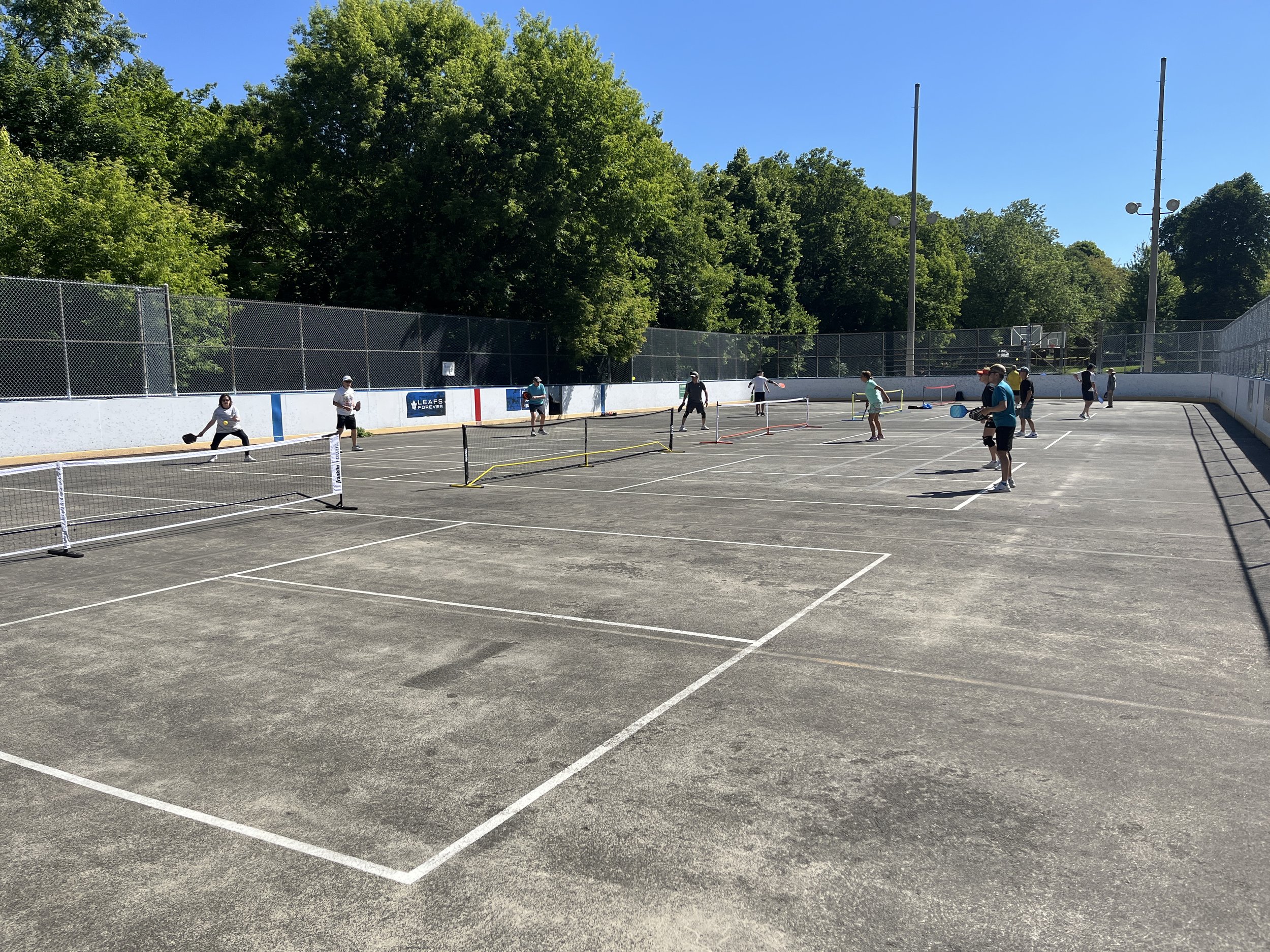
The visual contrast is just as stark as the auditory one. Tennis courts, once pristine rectangles of green and blue, are now increasingly crisscrossed with confusing new lines, turning the baseline into a geometry puzzle of conflicting colors. Portable nets are dragged on and off like furniture in a shared apartment. The tension is palpable. There are glares and passive-aggressive comments about "real sports." There is a pervasive perception among Toronto’s tennis community that they are the victims of a zero-sum game.
The logic from the tennis camp goes something like this: every new pickleball player is a lost tennis player, and every hour of pickleball played on a shared court is an hour stolen from the legacy sport. They look at the encroaching pickleball lines painted over their service boxes and see scars; they look at the temporary nets cluttering the sidelines and see debris. It feels like a hostile takeover of a sport that has held a monopoly on public court space for over a century.
This defensive posture is understandable—nobody likes to share something they used to own exclusively (especially if the new tenant is louder)—but the data, and my own experience, suggests the "replacement theory" is fundamentally wrong. The frustration tennis players feel is real, but their diagnosis of the cause is flawed. Tennis isn’t dying. The issue isn't that pickleball is killing tennis; it’s that both sports are booming simultaneously in a city that hasn't built significant new recreational infrastructure since the Toronto Maple Leafs last won the Stanley Cup - okay that might be a slight overstatement but you get my point - it’s been awhile.
We aren't witnessing the death of one sport and the birth of another. We are witnessing a collision of two waves of demand crashing against a rigid, outdated supply of real estate.
The "Convert" Myth: Who is Actually Playing?
One of the primary arguments you hear from the "anti-pickleball" lobby is that the sport is simply a retirement home for washed-up tennis players—a place where people go when they can no longer cover the court. While there is a grain of truth to this (it’s certainly easier on the body), my personal experience on the courts tells a different, more nuanced story.
A large segment of the pickleball explosion is fueled by people who were never on a tennis court to begin with. These are "net-new" athletes. They are the people who found tennis too difficult, too expensive, or too elitist. They are the people who haven't played a competitive sport since high school gym class. The groups I play within are clearly much younger than me - I’m the old guy in the game, usually the one explaining what a cassette tape was.
We have to look at the "barrier to entry" regarding pure enjoyment. Tennis is a sport of delayed gratification; it has one of the steepest learning curves of any major recreational activity. For a beginner, a tennis match is 90% chasing balls and 10% hitting them. It requires complex biomechanics: the kinetic chain of the serve, the footwork to set up a backhand, the grip changes for a volley. It can take years of lessons and hundreds of dollars to develop a game that is merely "competent."
Pickleball completely bypasses this "suffering phase. You can walk onto a court with zero experience, hold a paddle for the first time, and sustain a ten-shot rally within 20 minutes. This instant dopamine hit appeals to a demographic that tennis simply cannot capture: the casual athlete who wants to play a game, not master a discipline.
Furthermore, the social architecture of the two sports is fundamentally different, and this is where pickleball is winning the "culture war." Tennis is often solitary or dualistic—you focus intensely on your opponent or your partner, often separated by a great distance (78 feet, to be exact). The silence is mandatory; chatter during a point is a violation of etiquette.
Pickleball, by contrast, is compressed. You are physically closer to your opponents than you are to the net in tennis. This proximity forces interaction. This fosters banter, jokes, and a social dynamic that feels more like a bowling league or a round of golf than a Wimbledon final.
The End of the Secret Affair
There was a time, not long ago when admitting to your tennis foursome that you played pickleball was akin to admitting you preferred instant coffee over espresso. It was a guilty secret, whispered in hushed tones. The assumption among the tennis elite was that if you picked up a paddle, you had officially "retired" from athleticism. You were viewed with a mix of pity and suspicion, as if you had traded your Wilson for a walker. To be a "dual citizen" of both sports was to be a traitor (a sort of Benedict Arnold of the backhand).
But that social stigma is rapidly fading. The "shame" of playing pickleball is being replaced by a genuine curiosity. We are seeing a cultural shift where high-level tennis players are no longer hiding their paddle addiction. We seem to be reaching a point where it is acceptable to say it out loud: I play pickleball. The need to be embarrassed is evaporating because the sport has proven it isn't just a downgrade—it's a different discipline entirely. It’s no longer viewed as "tennis-lite" for the injured.
The Toronto Reality Check: The Hunger Games of Booking
If tennis were truly "losing" to pickleball, we would expect to see the traditional signs of a dying industry. We would see tennis clubs begging for members. We would see "Open House" signs at the local community clubs, waived initiation fees, and empty slots on the booking sheets.
In Toronto, we see the exact opposite. The scarcity issue isn't confined to public parks; it is perhaps more acutely felt within Toronto’s community tennis club model. Waitlists for prime-location clubs stretch for years—long enough to raise a child, teach them to play tennis, and then have them start waiting on the same list. Yet, if you walk past these same courts on a Tuesday morning, they may appear conspicuously vacant. This apparent contradiction is due to the complex internal dynamics of a saturated system. These clubs are full but are they really full?
Many high-level or team-oriented players maintain memberships at multiple community clubs—sometimes two or three—effectively operating a tennis club subscription service for themselves to ensure access to various competitive leagues, inter-club matches, and a wider range of partners. This multi-membership stacking, while strategically sound for the individual player, effectively removes those court hours from the general membership pool at each respective club, severely limiting new member intake. Have these “clubs” created their own problem? Could they actually let in more people? (Spoiler alert: they could, but that would involve changing a 100-year-old mindset, and nobody has time for that).
Trying to join a community tennis club in this city is currently harder than getting Taylor Swift tickets. It is a closed loop. Waitlists for neighborhood clubs like Davisville, Leaside, or Kew Gardens are thousands of names long. Some clubs have effectively closed their books entirely, refusing to even take new names because the wait time exceeds five years. You could practically put a toddler on a waitlist today and they might get a membership by the time they are packing for university.
This artificial scarcity creates a pressure cooker environment. When a tennis player finally secures that precious hour—after waking up early, refreshing their browser, and fighting the system—seeing a pickleball group encroach on their space feels like a personal affront. It’s not because they hate pickleball in a vacuum; it’s because the resource they fought so hard to get is being squeezed.
This suggests that the "exodus" to pickleball is a myth. Tennis is retaining its players. The demand for tennis in this city hasn’t softened—it has hardened. The friction we feel on the courts is the result of two healthy, growing populations colliding in a city that treats recreational space as a luxury rather than a utility.
Toronto has undergone a vertical explosion. We have built hundreds of condo towers, adding tens of thousands of new residents to neighborhoods like Liberty Village, Yonge and Eglinton, and the Waterfront. But we have not built the horizontal amenities to match. We added the people, but we didn't add the courts. The tennis ecosystem is full; the pickleball ecosystem is homeless. That is the real conflict. It is a failure of urban planning, not a failure of sporting culture.
.
The Economics of Indoor: Why Pickleball is Winning the Rent War
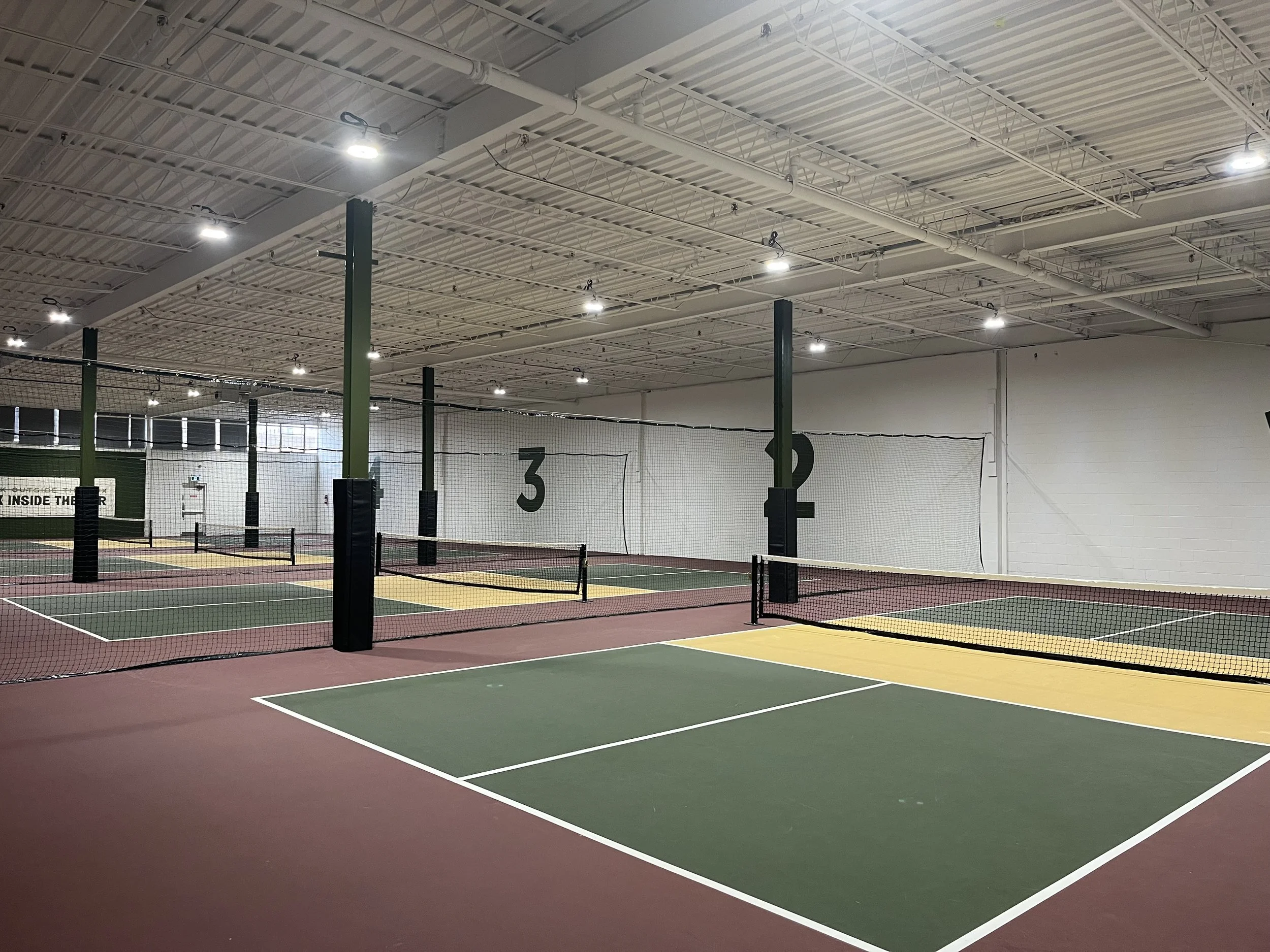
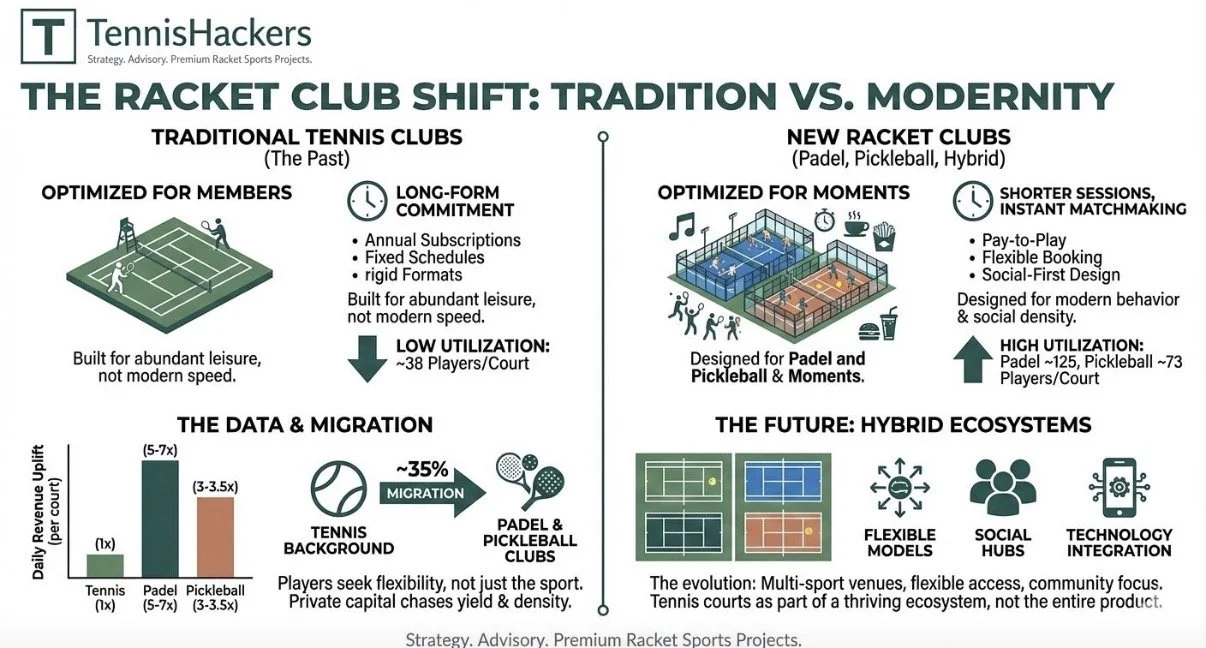
While the outdoor war is fought over public space, the indoor war is being fought with cold, hard cash. You might have noticed that while outdoor courts are a battleground, new indoor clubs seem to be exclusively pickleball. Facilities like Pickleplex or The Jar are popping up in retrofitted spaces across the GTA, while new indoor tennis clubs are virtually non-existent. By my count there are 35+ indoor pickleball facilities within an hour of downtown Toronto. And there are more coming (probably in your old Blockbuster store). I’m not counting the YMCA’s or school gyms that have indoor pickleball either.
This is not a conspiracy; it is brutally simple economics. In a city like Toronto, where commercial real estate is among the most expensive in North America, square footage is the ultimate currency. Tennis is an inefficient tenant. A standard tennis court takes up roughly 7,200 square feet (60' x 120'). In that exact same footprint, you can comfortably fit four pickleball courts.
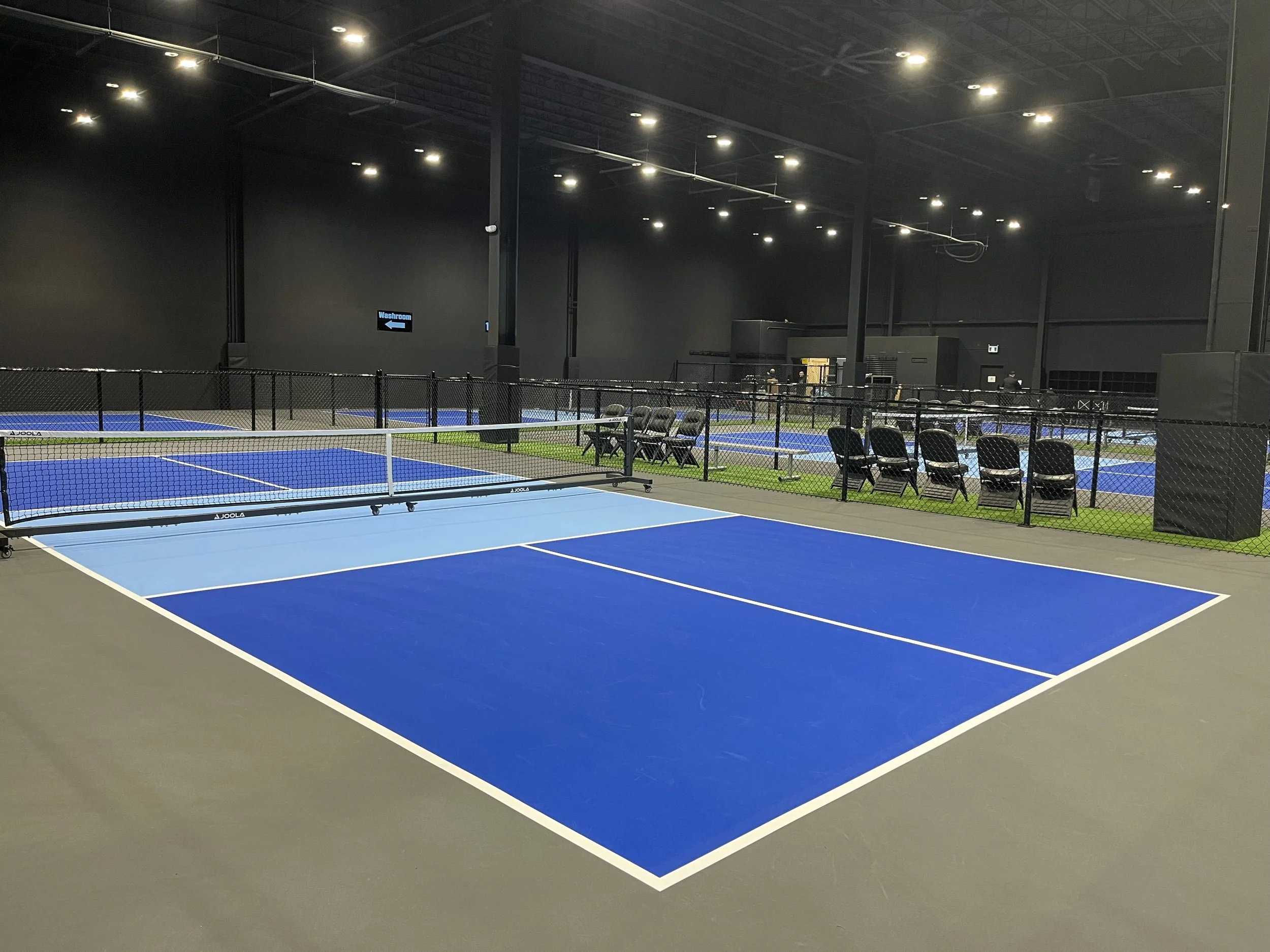
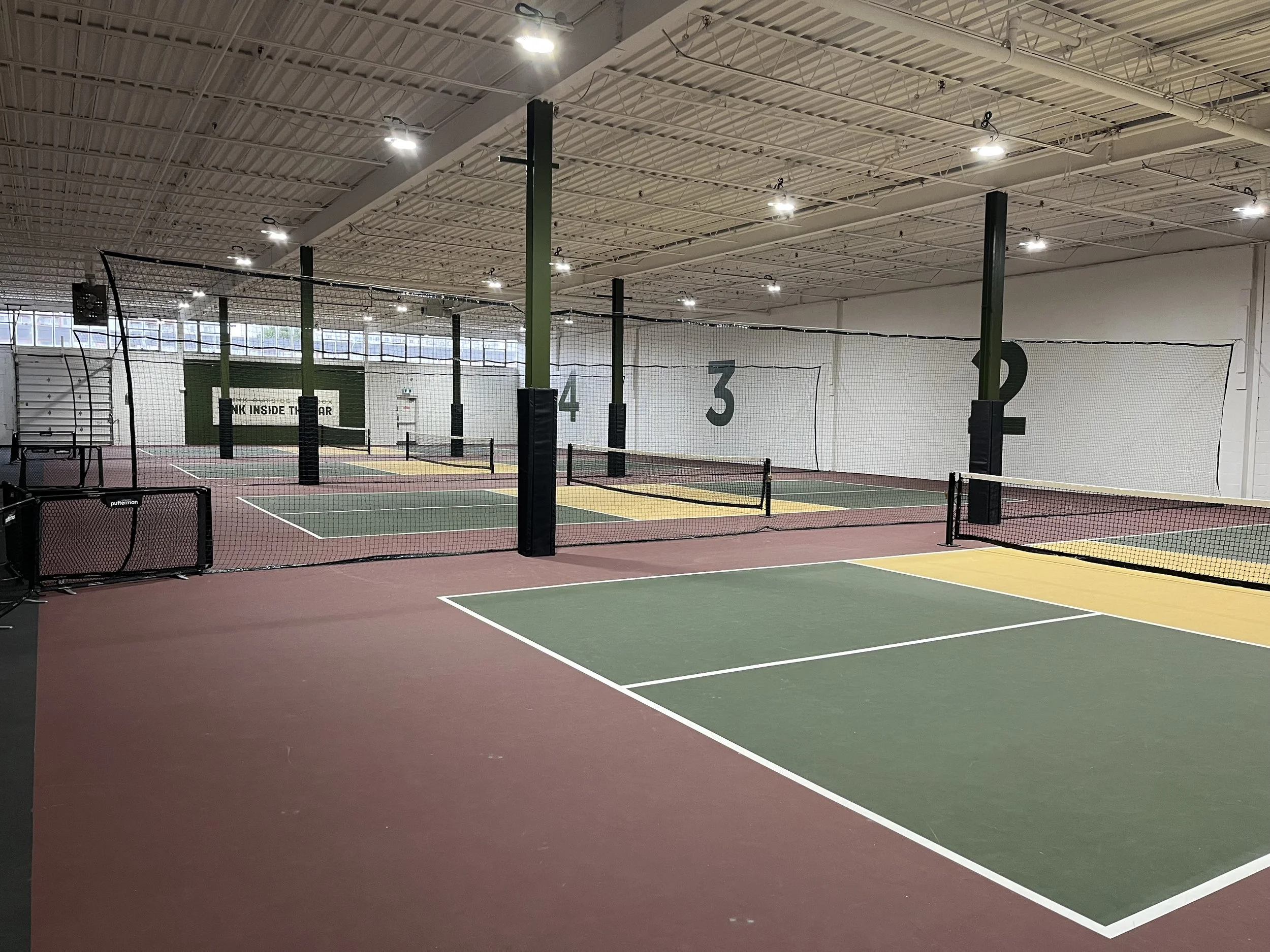
From a landlord, developer, or business owner's perspective, the math is undeniable. Let's look at the revenue potential. If you charge $50 an hour for an indoor tennis court (a standard rate in Toronto), you make $50 per hour from that 7,200 square feet. If you convert that space to pickleball and charge even a modest $30 per court, you are suddenly generating $120 an hour from the same patch of concrete. This "4-to-1" ratio is why private money is flowing exclusively toward pickleball. (It’s less of a sport and more of a real estate hack).
This density allows for a different business model entirely. Pickleball facilities can monetize "fun" in a way tennis clubs cannot. They can host corporate events. They can have a lounge area where 50 people are drinking and watching 50 other people play. Tennis, with its silence and spread-out nature, resists this kind of monetization. You don't see people sipping IPAs while watching a Tuesday night recreational doubles tennis match. Well, maybe not at all tennis clubs.
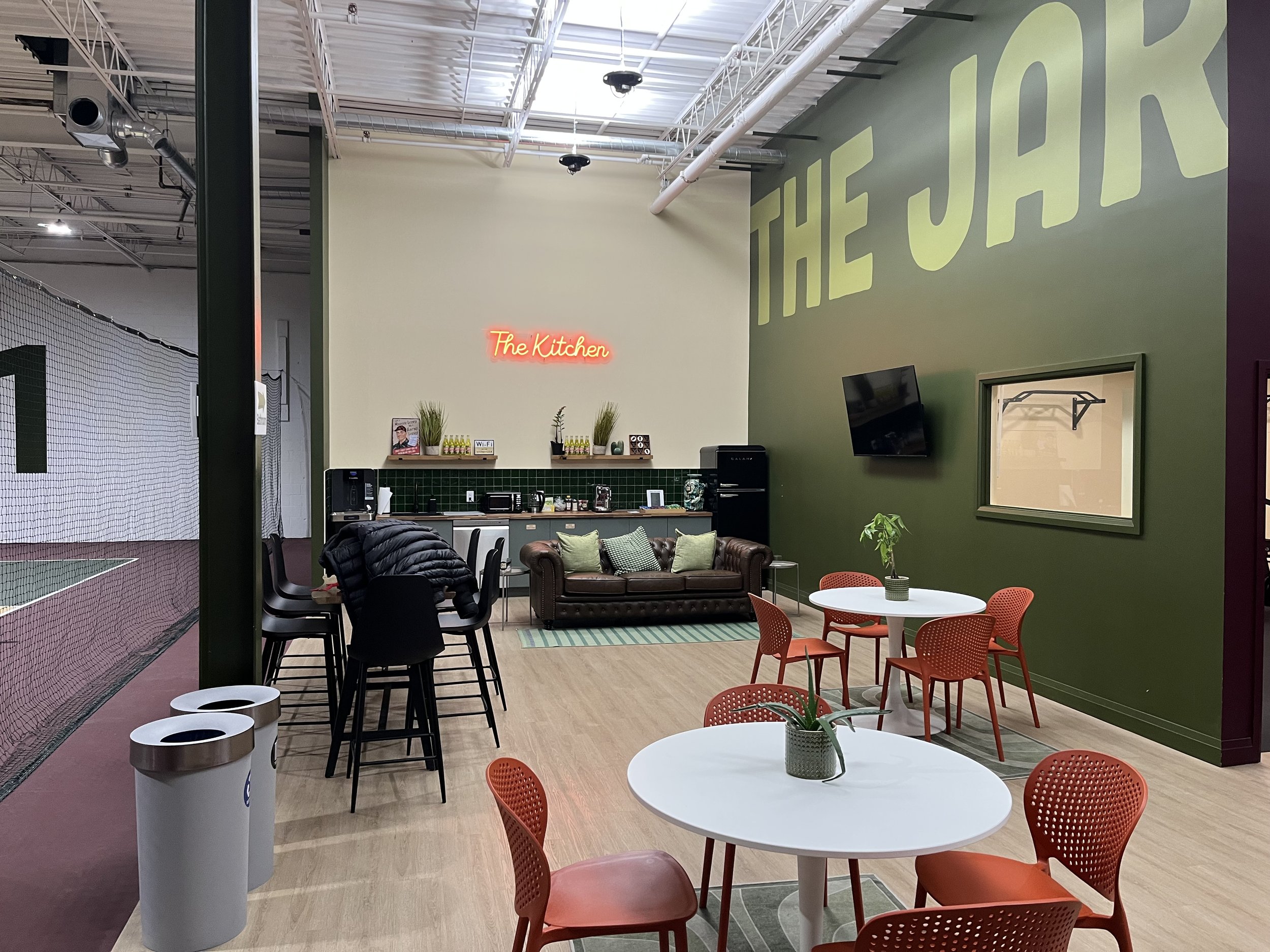
The Jar Lounge
Furthermore, pickleball is "real estate resilient." To build a proper indoor tennis facility, you need massive clear-span structures, huge air-supported bubbles, or expensive steel buildings with 40-foot ceilings to accommodate lobs. It is a capital-intensive project with a slow return on investment. Pickleball, however, can be retrofitted into almost any vacant warehouse, big-box store, or industrial space with standard ceiling heights. It can slip into the cracks of the urban landscape. Wasn’t that the old Target store? They play pickleball there you say? (The answer is almost certainly yes).
The market isn't making a judgment on which sport is "better"; the market is ruthlessly calculating the revenue per square foot. So, how do these sports exist together?
The hard truth is that they shouldn't.
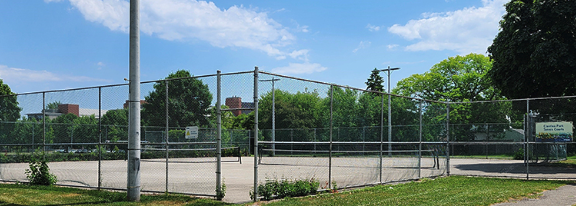
The current "hybrid" model—where municipalities paint confusing lines over tennis courts and ask everyone to "share the road"—is a compromise that leaves everyone miserable. It is a design failure.
For tennis players, the visual noise of a shared court is genuinely disruptive. Tennis relies on split-second visual processing of the ball against the court boundaries. When the court is a spiderweb of conflicting yellow, blue, and white lines, that processing is hindered. It fundamentally degrades the quality of the tennis experience. You are constantly second-guessing whether a ball was "out" by tennis standards or "in" by pickleball standards.
Conversely, for pickleball players, playing pickleball on an outdoor hockey rink is often a compromise of safety and quality. But the biggest incompatibility is acoustic. This is the elephant in the room that urban planners often overlook. Tennis is a sport of relative quiet; the rhythm of the game allows for concentration. Pickleball is percussive. The frequency of the ball striking the paddle is sharper, louder, and higher-pitched than a tennis ball. Placing a pickleball court immediately adjacent to a tennis court is like putting a bowling alley inside a library. It creates an inevitable behavioral conflict. You cannot ask pickleball players to be quiet (the noise is inherent to the equipment and the culture), and you cannot ask tennis players to ignore it (it disturbs the focus required for their sport).
The only sustainable future is total separation—a "divorce" of the facilities. Cities need to stop looking at tennis courts as "multi-use pads" and start building dedicated pickleball hubs. These hubs should be designed with sound mitigation in mind, located away from residential windows, and fenced separately from tennis courts. And while you're at it, expand some of these community clubs like Kew and Sir Winston Churchill. They do have the land.
When pickleball has its own home, it becomes a valid sport rather than a nuisance. It stops being the "annoying little brother" interrupting the tennis game and becomes a legitimate neighbor.
So, we return to the central question: Do tennis players need to chill when it comes to talking about pickleball? Do you really need to look at them with fear and anger?
The answer is a nuanced "yes and no."
The anger regarding the loss of quiet, dedicated space is entirely valid. Tennis requires a specific type of environment. It is a difficult sport that demands concentration. It is unfair to tell tennis players that their desire for a proper environment doesn't matter, or that they are being "Karens" for wanting to preserve the integrity of their game. They aren't wrong to be annoyed by the noise—they are just wrong about who to be annoyed at (Hint: Blame the city council, not the guy in the tie-dye shirt).
Pickleball players aren't vandals destroying the sanctity of the game; they are simply neighbors looking for the exact same things tennis players want: exercise, endorphins, community, and a break from the grind of city life. The "turf war" is a distraction from the real issue, which is that Toronto has outgrown its own playgrounds. The friction between the sports is a symptom of scarcity, not malice.
However, tennis players do need to accept that the landscape of racquet sports has fundamentally changed. The era of the tennis monopoly is over. For a hundred years, if you wanted to hit a ball with a racquet in a public park, tennis was the only game in town. That era isn't coming back. The rise of pickleball hasn't taken away the joy of tennis; it has simply forced tennis to share the spotlight—and the asphalt—for the first time.
The animosity we see today is wasted energy. No amount of complaining about the "pop" of the ball, the "lack of skill" involved in pickleball, or the "ugly lines" will reverse the trend. Pickleball is here to stay because it solves problems that tennis cannot: it is accessible to the aging, inviting to the novice, and fits four times as many taxpayers into the same square footage.
If tennis wants to thrive in this new dual-sport reality, it needs to stop viewing pickleball as an enemy combatant and start viewing it as a warning sign. The tennis community needs to organize, not against pickleball, but for infrastructure. Everyone needs to stop fighting over who gets the existing slice of the pie and start demanding a bigger pie.
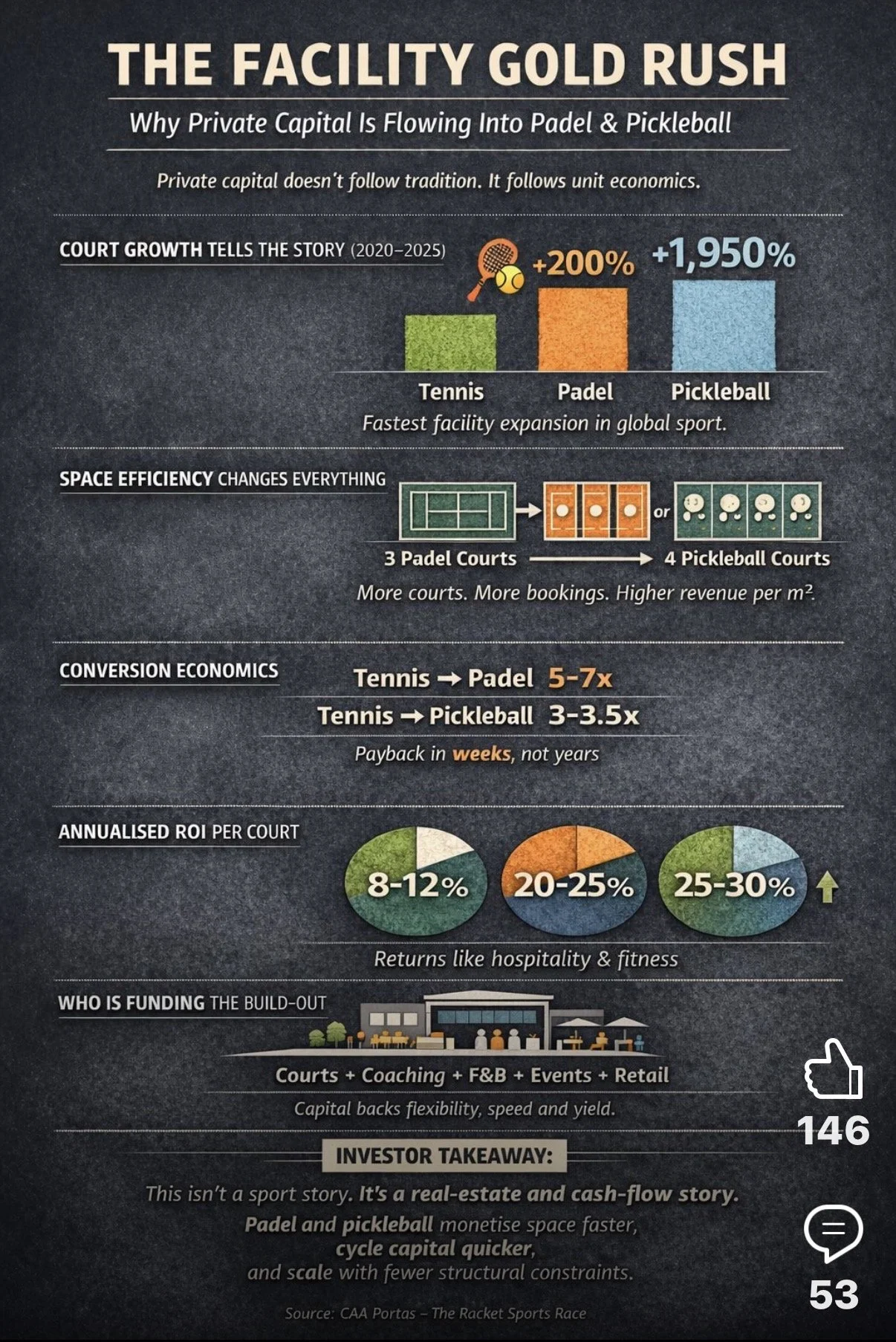
The Padel Precedent: A Third Wave on the Horizon
If the conflict between pickleball and tennis feels like a two-front war, imagine the implications of a third, looming powerful force entering the battle for Toronto's recreational space: Padel. While pickleball dominates the conversation on public courts, Padel is the fastest-growing racquet sport globally, having already conquered Europe and Latin America, and is now rapidly making its footprint in North America, particularly in private, upscale club settings.
The challenge Padel presents is not for the public courts (yet), but for the indoor real estate market, directly competing with the economics that made indoor pickleball so successful. Padel courts are significantly larger and more expensive to build than pickleball courts, requiring specialized glass and taller ceilings. However, they command a much higher price point making them highly attractive to private developers. The construction of dedicated Padel centers, such as the ones recently announced for the Greater Toronto Area, shows that the demand for novel, social, and accessible racquet sports is far from satisfied.
The real question is: If Padel takes off in Toronto, will it siphon off the social, affluent players from tennis clubs, or the aspiring, younger players who find pickleball too casual? Private tennis clubs like the Lawn, the Cricket etc. should be the master of their own universe and read the tea leaves. Adding these new sports enhances their future rather than dooming it. But that's a topic for another day (and perhaps another fish & chips outing).
Ultimately, the rise of Padel simply reinforces the core argument: Toronto's recreational infrastructure is insufficient to support the modern, diverse demands of its active urban population. Hey, I get it. Dwindling resources are being fought for from all areas from health care, transit to education and building more pickleball courts is not ranking high on anyone’s list.
But what has this got to do with the type of fish and chips one should order? Nothing, but if you asked me you have to go with the halibut. (It’s the least controversial choice, much like avoiding a discussion about what sport is better).
And to go on the record - tennis is much tougher to play and master than pickleball but who cares? They are both great.